

“Missing live music? These concert films might help - WUSA9.com” plus 1 more |
| Missing live music? These concert films might help - WUSA9.com Posted: 18 Apr 2020 10:29 AM PDT 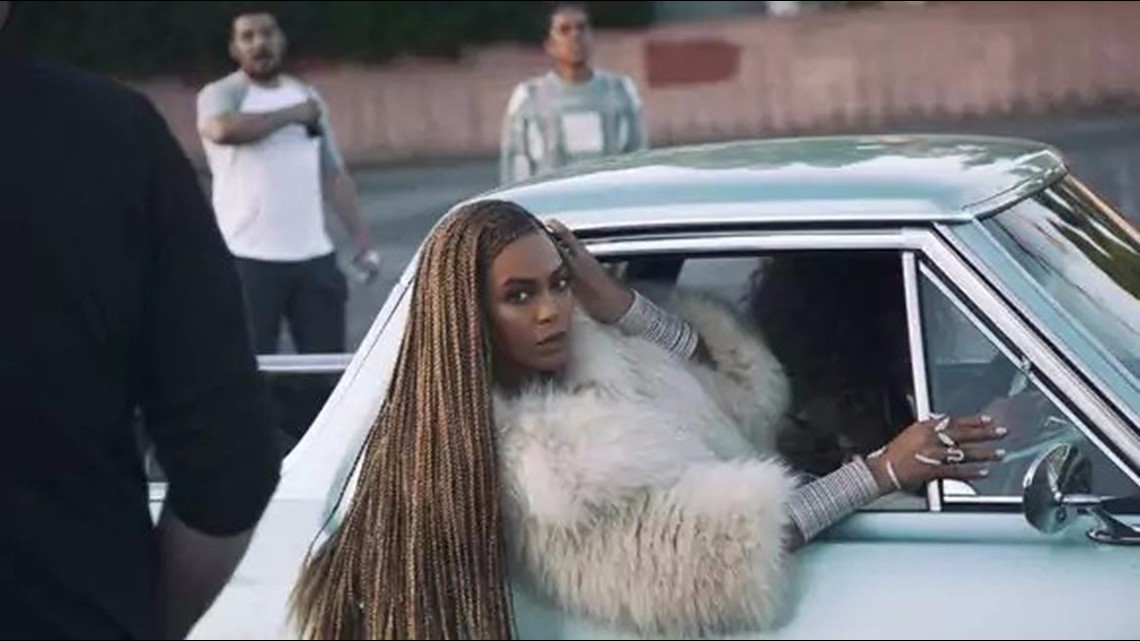 WASHINGTON — Let's face it: It's probably going to be a while before all of us can get together and enjoy a concert in person again. The coronavirus and social distancing rules have made the idea of gathering in a club or a stadium seem like a thing of the past. Luckily, there are still ways to get your live music fix from a safe distance, beyond looking at your own saved Instagram stories and IGTV videos. We've compiled a list of some of the best concert films and live performances you can watch right now via your streaming service of choice. Stop Making Sense (Amazon Prime) Widely considered to be one of the greatest concert films of all time, this 1983 Talking Heads performance recorded over four nights still holds up decades later. Songs like "Burning Down the House" and "Slippery People" crackle with energy. It also serves as a great at-home workout if you mimic David Byrne's dance moves throughout the film. This film chronicles Beyonce's now-iconic Coachella performance in 2018. You get a behind-the-scenes look of what it took to bring the incredible stage production together, and an amazing view of the show itself. With the next Coachella delayed until at least October, it's your best opportunity to revisit the California desert. Shut Up and Play the Hits (Hulu) Shut Up and Play The Hits documents indie dance band LCD Soundsystem's "last" show at Madison Square Garden in 2011. The band would later reunite and release new music in 2017. But for the band's farewell show, they pulled out all the stops. These infectious dance grooves will have you bouncing around your living room for sure. The Band's farewell tour is captured here by Martin Scorsese. Plenty of amazing special guests make appearances including Eric Clapton, Van Morrison, Bob Dylan and more. Taylor Swift Reputation Stadium Tour (Netflix) By now you may have already seen Taylor's Ms. Americana documentary, so let's take it back to 2018 and watch her rock some arenas. Sometimes you just need some T-Swift in your day. The Decline of Western Civilization (Amazon Prime) Have the urge to thrash around a little bit? This doc takes you inside the world of the Los Angeles punk rock scene in the 1980s. With performances by Black Flag, The Germs and X, it will make you want to start a one-person mosh pit. Just try not to break any furniture. Aretha Franklin: Amazing Grace (Hulu) Amazing Grace captures the Queen of Soul in her prime. Recorded in 1972 but not released until after her death, the documentary captures her performance of gospel songs at New Temple Missionary Baptist Church in Watts, Los Angeles. And it is downright phenomenal. RELATED: Bringing the arts to your living room: Kennedy Center to host 'Couch Concerts' during quarantine RELATED: Musicians turn to virtual concerts during coronavirus' spread RELATED: Dave Matthews set to play live-stream concert to kick off Verizon's charitable web series |
| 10 years of Beyoncé: A decade "causing all this conversation" - Salon Posted: 28 Dec 2019 12:39 PM PST  When the American Music Awards gave Taylor Swift the title of Artist of the Decade, TV show host Wendy Williams was likely not the only one surprised. Of this decade's pop juggernauts, Beyoncé has stood at the intersection of a turbulent political climate and a problematic celebrity culture. A look back at Beyoncé's 2010s shows that her work — radical and important — also comes with uncomfortable contradictions. Her status as celebrity and family woman has come to represent black empowerment but despite her triumphs, the singer was far from uncontroversial. "You Know You're that Bitch When — " The decade began rather quietly for Beyoncé who, notably, did not dominate the 2010s with hit singles. But her albums imprinted into pop history, particularly in the years after the 2011's 4. In January 2013, David Bowie released a surprise album The Next Day recorded in secret. In February of the same year, the band My Bloody Valentine released their last album on their website and, later, for free on YouTube. The surprise album drop may not have been a new invention. Yet when Beyoncé's self-titled visual album burst onto iTunes in December 2013, it forced conversations about artists bypassing traditional media and middle-men to strengthen the bond between themselves and their fans. Some stores, like Target, refused to stock the physical album in defiance. Advertisement: Beyoncé's legacy at the end of the decade is apparent now. Singers can garner fanbases, fame and success with little more than a Soundcloud, YouTube or Instagram account. Beyond daring business strategy, Beyoncé continued to push the creative envelope. Beyoncé was concerned with feminism. But she intensified her resistance politics when she released Lemonade in 2016 with an accompanying hour-long film on HBO. In her performances of the album after its release, Black power and Afrocentric iconography took centre stage. Notable of these was the 2016 Super Bowl halftime show, in which her performance of the anti-police brutality lead single "Formation" featured backup dancers courageously wearing the uniform of the radical Black Panther Party. Ultimately, Lemonade aligned itself with the #BlackLivesMatter movement that exploded in the middle of the decade as protests against the oppression of African Americans entered the mainstream. With its frank revelation of the infidelity of her husband, rapper Jay-Z, the album has also been hailed as a celebration of Black (female) resilience. A Black Bill Gates in the making Criticisms of this new radical Beyoncé were parodied brilliantly by Saturday Night Live. Though some were decidedly unfair, it is true that contradictions simmer beneath the surface of her political image. How does one reconcile the centering of the African diaspora in Lemonade with her controversial 2018 Vogue interview, in which she references her slave-owning ancestor as a man who "fell in love with and married a slave"? Romanticization of the union between a white slave master and Black slave woman is especially problematic when one considers the disproportionate power dynamics between white slave owners and Black slave women during the time and the lack of agency slave women often had in such sexual relationships. Using the language of love and romance to describe such relationships between Black women and white men not only highlights Black women's lack of sociopolitical rights but seemingly clashes with her overt displays of Black feminist power. Furthermore, how does one reconcile Beyoncé's promotion of Black singers and Black women in The Gift with the theft of Black singer Ledisi's opportunity to reprise her performance in the movie Selma (2014) at the 2015 Grammys? In an industry often reluctant to give Black singers opportunities and accolades (of which Beyonce has herself been a victim), Beyonce's selection of which opportunities to give to and to take from less-exposed Black singers requires some consideration. As cultural theorist and music industry insider Kristin J. Lieb has argued, in a competitive music industry, a pop star's continued survival, wealth and fame depends on having a consumable brand. Black experience and struggle can certainly be useful commodities in that regard, especially during these politically intense times. That may or may not represent the singers' true politics. A billion dollars in an elevator There is a tension between Beyoncé the Black Revolutionary and Beyoncé the Business Woman/Brand in the 2010s. Her album releases are landmark cultural moments that generated conversations around feminism, Afrocentricity and artist agency. But this tension — between capitalism and liberation — shadowed Beyoncé's decade, including in the domestic sphere. At the 2011 VMAs Beyoncé ended her performance of "Love on Top" by rubbing her protruding belly, revealing her pregnancy to fans. The Knowles-Carters became one of the Black superfamilies of the 2010s. After the 2014 Met Gala, fans saw Jay-Z in elevator fight with Beyonce's sister, Solange. Fans also watched Beyoncé's firstborn, Blue Ivy, blossom and begin to participate in her mother's work. Beyoncé's child became an icon for Black empowerment for young girls. In the photoshoot for Beyoncé's second pregnancy with twins Rumi and Sir Carter, Beyoncé was staged as a pregnant goddess. The singer powerfully contradicted deep-seated cultural beliefs of pathological Black mothering famously displayed in the sociological Moynihan Report of 1965 that demonized and blamed Black mothers for the "failure" of Black families. https://www.instagram.com/p/BP-rXUGBPJa/?utm_source=ig_web_copy_link The frenzied behaviour of Beyoncé's fans, called The Beyhive, along with Lady Gaga's Little Monsters changed fan-celebrity relationships. It marked a neoliberal turn towards intense inter-fandom competition and worship that helped lay the foundation for the today's pop fan culture. But towards the end of the 2010s, the voices of scrutiny grew louder. Like earlier criticisms of Beyonce's professed radicalism, many grew tired of the family's flaunting of their wealth and distrustful of their business endeavours. For example, the streaming service Tidal was accused of fabricating numbers of their exclusive artists (including Beyoncé). Jay-Z's 2019 deal with the National Football League despite the league's treatment of Black players and protest seemingly contradicted the family's pro-Black politics. Fans feel conflicted about Beyoncé's continued support of Jay-Z despite his famous infidelity. This tension showed in the lack of support from fans for the couple's joint 2018 album, Everything is Love. Lyrics like "Of course shit goes down when it's a billion dollars in an elevator," attempt to dismiss the tensions within the Knowles-Carter family image. And despite the continued strength of the Beyhive's support, by the end of the decade, contradictions continue to haunt the brand of the Knowles-Carters as a powerful Black family. A winner don't quit on themselves And yet, the fact that Beyoncé's Black family were considered worthy of elevation and/or complex readings through nuanced critical discourse is itself an important rebuke of old anti-Black dehumanizing stereotypes. This cannot be ignored. Such is the duality of Beyoncé: a powerful Black woman working within a white patriarchal music industry in which the pursuit of fame and wealth is the goal, strategically using, yet still amplifying, narratives of Black empowerment in the mainstream. Despite the contradictions and controversies, Beyoncé's star power, virtuosity and ability to "cause all this conversation," will undoubtedly see her play an integral role in the 2020s as well. Sarah Olutola, Postdoctoral Fellow 2018-2019, Human Rights Research and Education Centre, L'Université d'Ottawa/University of Ottawa This article is republished from The Conversation under a Creative Commons license. |
| You are subscribed to email updates from "beyonce's movies,beyonces,beyond" - Google News. To stop receiving these emails, you may unsubscribe now. | Email delivery powered by Google |
| Google, 1600 Amphitheatre Parkway, Mountain View, CA 94043, United States | |





0 Yorumlar